
Key SEO and AI News for August 2026
While summer usually calls for taking a break, the world of search engines and AI never sleeps. The past few weeks have brought a wave of major updates - ranging from new Google Search Console reports for AI overviews and social media, to a complete overhaul of Google's official web crawling documentation, and new strategic dilemmas for content publishers.
We’re keeping pace here at Marketing Miner, too. We’ve rolled out significant upgrades to the Projects section, started storing historical rank tracking data for your competitors, and launched a dedicated prompt generator for AI visibility tracking. Let’s dive into the details!
1. Google Search Console Now Shows AI Overviews and AI Mode Impressions
Google has taken a major step toward transparency in AI search by separating generative AI data from standard search results within Search Console. While Google first introduced dedicated reports for generative AI - covering AI Overviews, Search AI Mode, and a separate report for Google Discover - on June 3rd, it was limited to a small test sample of websites. Only now, as part of a global rollout, is this new report becoming available to a broader audience.
However, as Carolyn Shelby points out in her detailed breakdown on Search Engine Journal, this is strictly an impression report, not an overview of actual site traffic or performance. The report simply indicates that a link to your site was cited as a source inside an AI-generated response. It tells you nothing about whether the user actually noticed the link, which specific fragment of your content was used to synthesize the answer, or how it impacted your conversions.
In the new overview, you can filter the tracking data by specific URLs, countries, devices, or date ranges. It does not disclose specific search queries, clicks, click-through rates (CTR), or average positions. Clicks from AI responses continue to be factored into your total numbers within the standard Search Performance report.
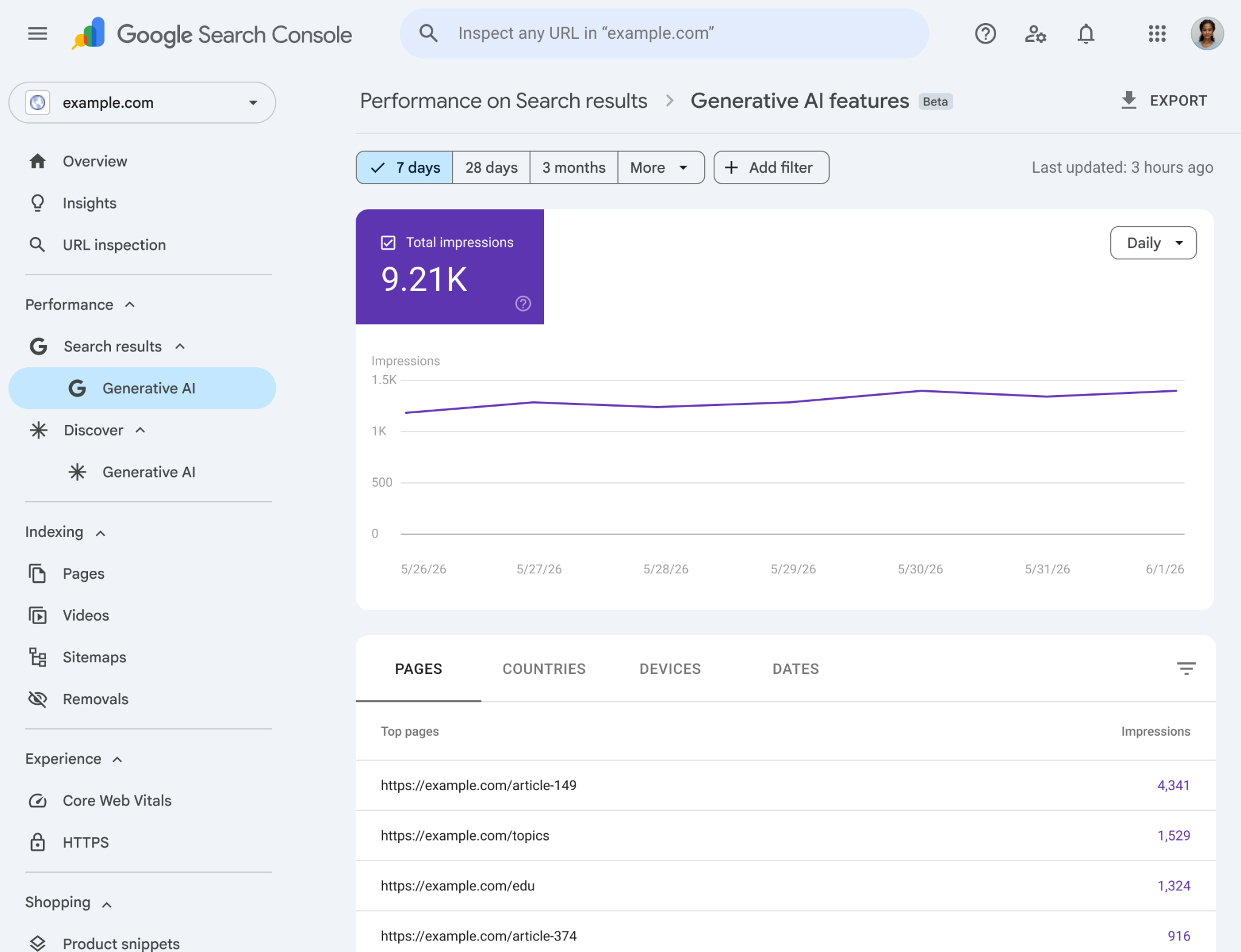
Google Search Console AI Performance Report
2. Track Historical Competitor Rankings in Marketing Miner Projects
Is your organic search traffic dropping? Without a benchmark, it’s tough to tell whether it's an industry-wide shift or if an aggressive competitor just overtook you. That’s why we’ve added historical competitor rank tracking to Marketing Miner Projects. Once you add up to 5 competitors to your project, we’ll start tracking their keyword positions and estimated organic traffic, saving this data historically over time.
What's new in the Competitor Comparison section:
- Estimated traffic trend chart comparing all tracked domains.
- Competitor breakdown displaying estimated traffic, average position (including period-over-period performance), and keyword distribution.
- Keyword-level comparison where green highlights clearly show the top-ranking domain for each query. Plus, for any site ranking in the TOP 20, you can view their exact landing page.
- Detailed keyword view featuring a rank tracking history chart for all monitored domains, core metrics for your site (estimated traffic, position, landing page), search volume, and competitors' ranking landing pages (within the TOP 20).
- We've also added a dedicated competitor filter to the advanced filtering options.
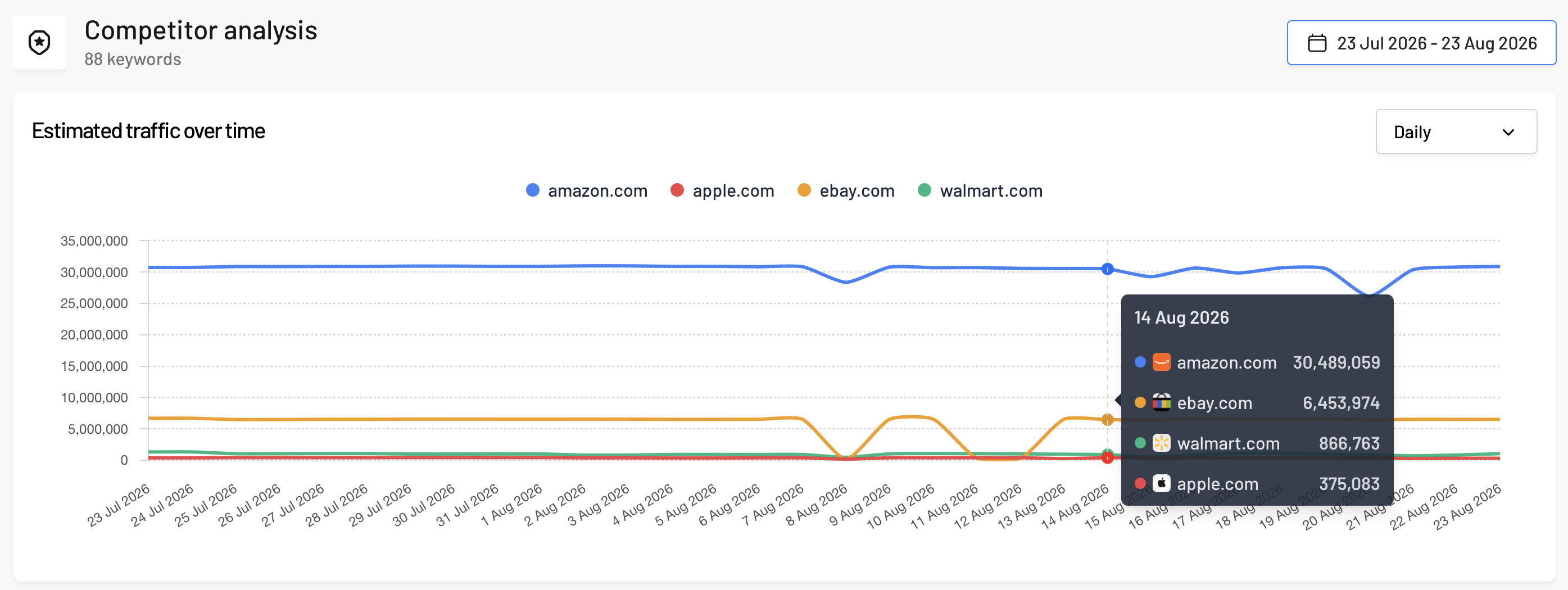
Learn more about competitor tracking
3. We’ve Upgraded Marketing Miner Projects with 6 Practical Features
We’ve overhauled the Projects section in Marketing Miner - our core tool for automated rank tracking on Google. To make working with your data even more seamless and actionable, we’ve rolled out 6 practical updates and expanded our metrics, giving you an even clearer view of your site’s performance alongside your competitors.
What’s new:
- Upload tagged keywords via CSV/XLS - when creating new projects or adding keywords to existing ones, you can now import keywords with tags directly from your files.
- Estimated traffic change data - see the exact monthly traffic gains or losses for every position shift in search results.
- Custom notes for backlink management - add custom notes (e.g. link cost, webmaster contact info, or partnership terms) directly to your tracked backlinks for easier link-building management.
- XLSX export for keyword movements - easily export your ranking winners and losers to see which queries jumped up or where you're losing ground.
- Instant quick filter - instantly pull up the exact data you need - just filter by keyword, tag, or URL in seconds.
- Competitor setup from day one - track up to 5 competitors right from the start. Add them during project setup to unlock Market Share analysis instantly, with no extra configuration needed.
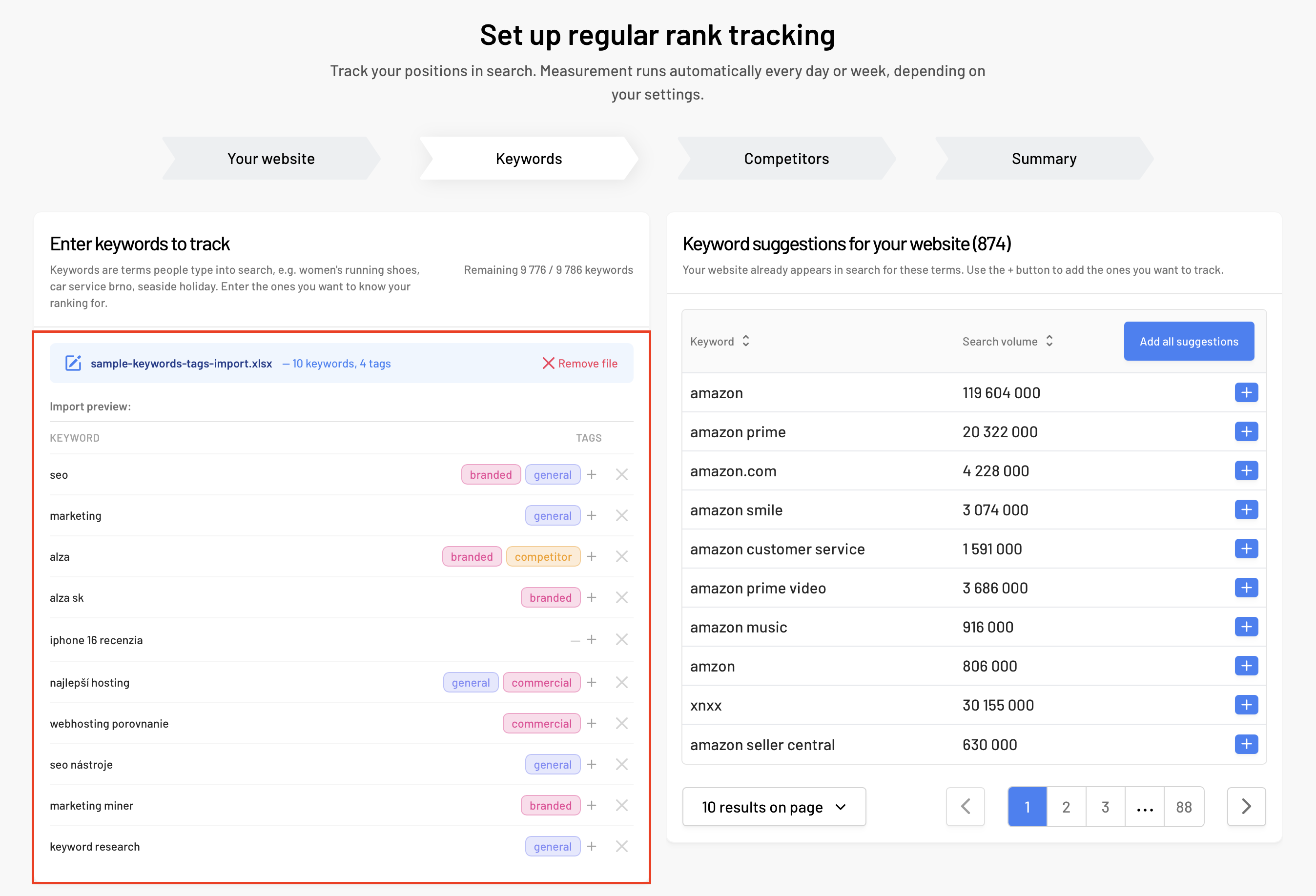
Importing keywords with tags via XLSX to Project
4. Google Launches Platform Properties to Track Social Media Directly in Search Console
On July 7, 2026, Google officially introduced Platform Properties, a new feature allowing creators and brands to track how their content on YouTube, TikTok, Instagram, and X (Twitter) performs in Google Search and Discover - directly inside Google Search Console. By late July, Google confirmed the full global rollout on their Search Central Blog, accompanied by a detailed guide on analyzing data and optimizing video and social content for search.
As Barry Schwartz highlighted on Search Engine Roundtable, these new properties also integrate seamlessly with the recently launched AI Performance reports. This means you can now track not only how your videos and social posts perform in standard organic results, but also how often they get featured within Google's AI responses.
Google has officially made it clear - SEO is no longer limited to traditional websites. If you produce videos or publish social media content, it's time to apply core SEO principles to those assets as well - from crafting titles around search intent and structuring video chapters to adding transcripts and addressing the exact queries your target audience searches for.
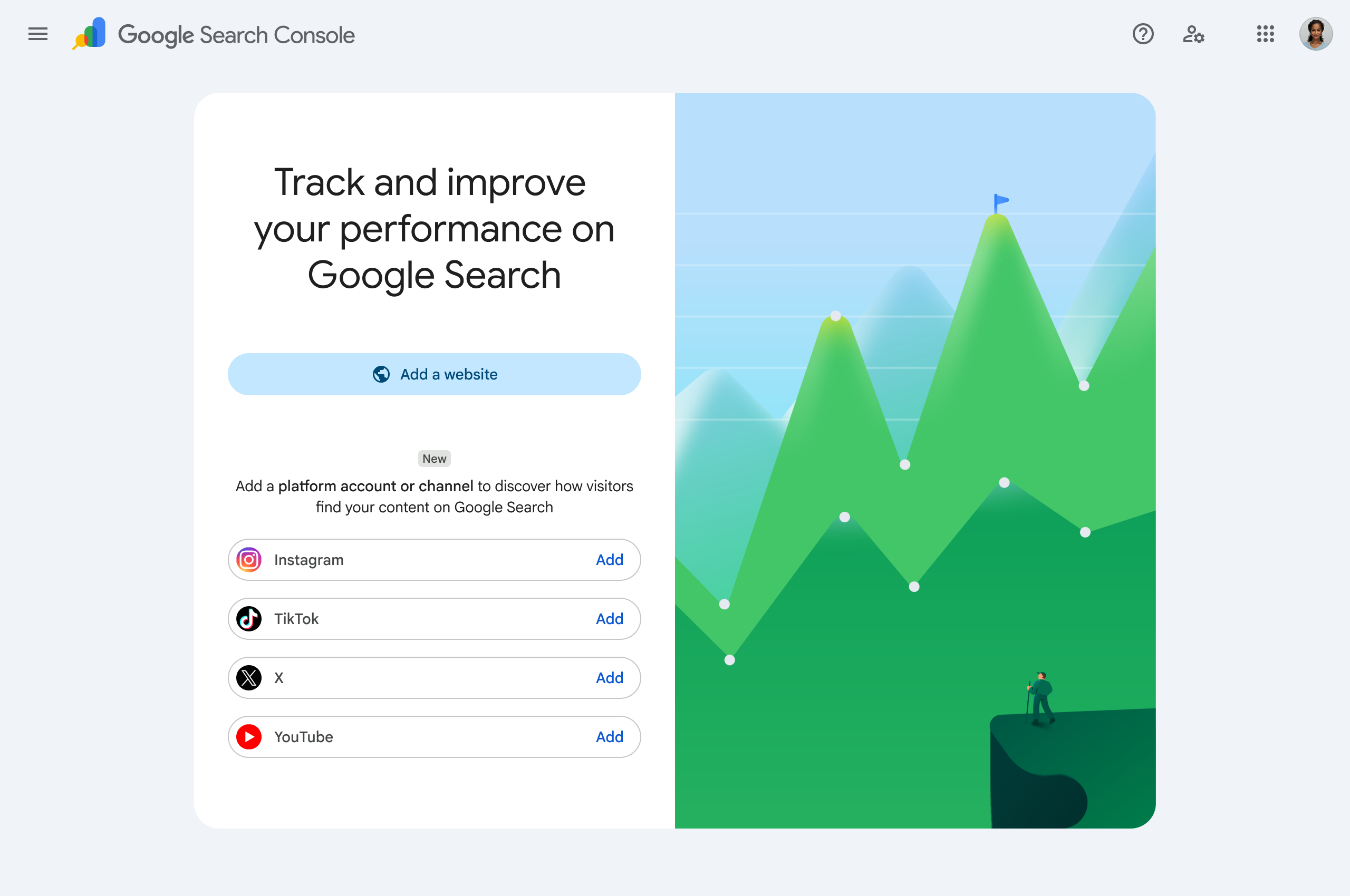
Social Media Tracking in Google Search Console
5. Marketing Miner Launches AI Visibility Prompt Suggestions Tool
Struggling to figure out which prompts to track for AI visibility tracking? You can now generate tailored prompts directly inside Marketing Miner. AI visibility tracking lives or dies by the prompts you monitor. Coming up with hundreds of realistic user queries manually is painstaking. On the flip side, relying on AI to brainstorm them without real data results in generic phrases that don't reflect actual customer behavior.
That’s why we launched our new AI Visibility Prompt Suggestions Tool, which builds a tailored set of 100 relevant prompts for your business in under a minute. Instead of relying on guesswork, the tool combines real data from four key sources:
- Website analysis - we crawl your site to fully grasp your product catalog, services, and core topics.
- Search volume data - we map the queries your site currently ranks for against real keyword search volumes.
- Clickstream data - we tap into anonymized user data to see how people actually phrase their questions to AI assistants (e.g. specific long-tail prompts like "Recommend a store where I can buy a grill microwave under $150").
- Tailored recommendations - the suggested prompt set is mapped directly to your keywords, showing you exactly which parts of your product catalog are covered.
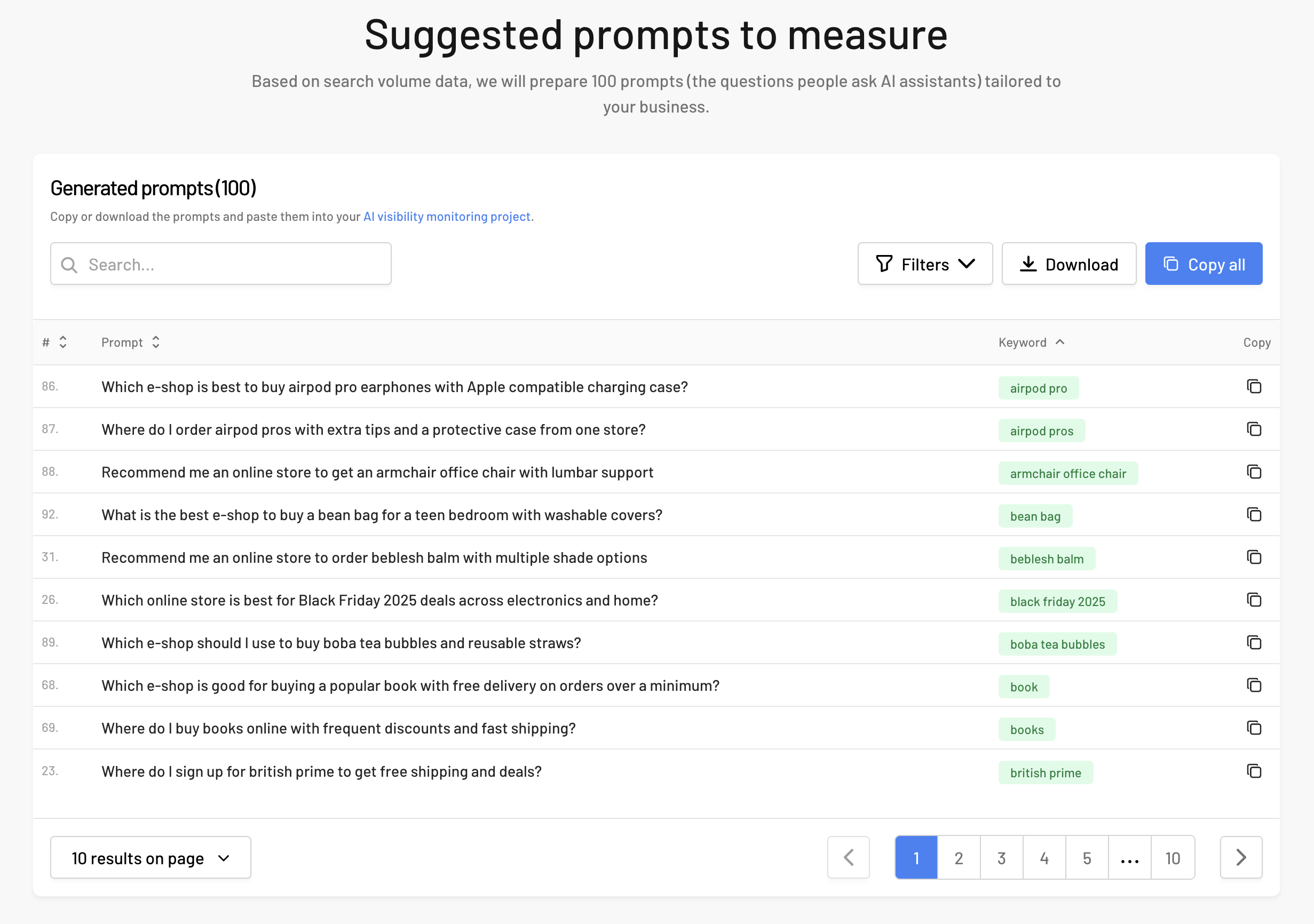
Suggested prompts in Marketing Miner
Simply navigate to AI Visibility -> Suggested prompts to measure in the top menu, enter your brand name, domain, and optionally up to 10 key product categories or services. You can then easily copy or download the generated prompts and import them straight into your AI visibility tracking project. Plus, you can revisit all your saved prompt sets anytime.
AI Visibility Prompt Suggestions Tool
6. Google Overhauls Its Crawl Budget Documentation
In late July 2026, Google released one of its most extensive updates to its official crawl budget documentation in years, introducing several brand-new concepts that reshape how we think about web crawling. As Barry Schwartz highlighted on Search Engine Roundtable, the headline takeaway is Google's official confirmation that every website starts with a default, highly conservative crawl capacity limit. This limit only increases automatically when Googlebot detects higher demand for new content (driven by site size, update frequency, content quality, and relevance) and confirms that your server is healthy enough to handle the load.
Crucially, Google clarified that this crawl capacity is shared across all Google crawlers. If one specific bot generates a surge in activity, it can temporarily reduce the available capacity for others. For larger, enterprise-level websites, wasting this default limit on low-value URLs is a major bottleneck. To optimize your crawl efficiency, focus on maintaining fast, stable server response times, using robots.txt to block unnecessary URL parameters or faceted navigation filters, and implementing HTTP 304 (Not Modified) headers. HTTP 304 status codes prevent crawlers from re-downloading unchanged pages, saving both server resources and crawl capacity for your fresh, critical content.
7. Top Stories Integrated Directly into AI Overviews
Google has begun integrating Top Stories carousels directly into AI Overviews responses across the US and UK. Instead of rendering news carousels as a standalone feature below the AI summary, Google is now embedding them right at the top of the AI block.
As highlighted in an analysis by NewzDash (and covered by Press Gazette), this hybrid format already appears for over 15% of news-related queries in the US - most prominently across entertainment, breaking news, and sports.
This shift presents a major strategic dilemma for publishers and media outlets. Many publishers have considered - or are already - blocking AI crawlers to prevent their content from being used to train generative models. However, opting out of Google's AI features means forfeiting visibility in these new, high-real-estate carousels at the very top of the SERP. Losing placement within integrated Top Stories can trigger an immediate, drastic drop in organic search traffic for trending and breaking topics.
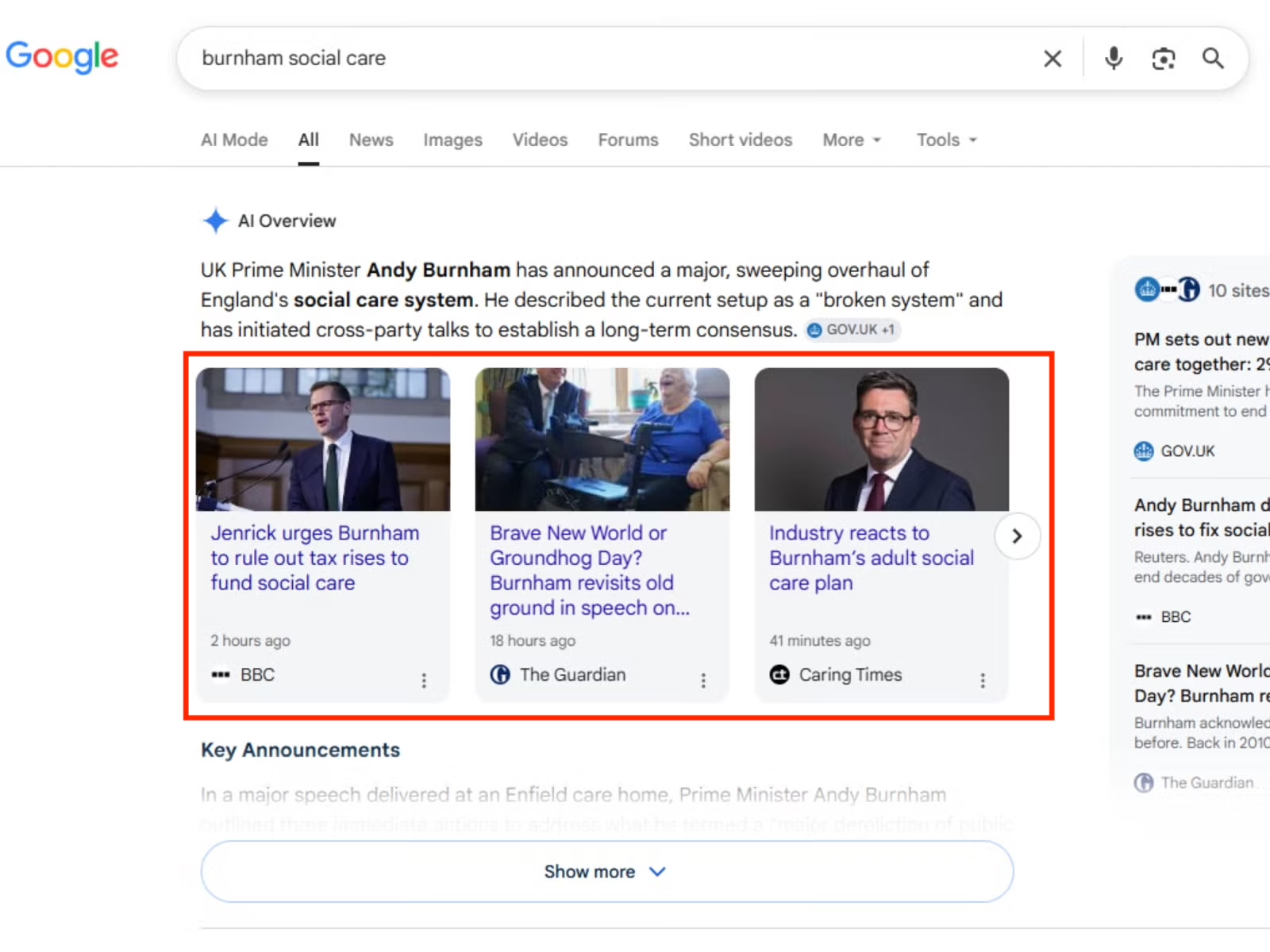
Top Stories Carousel Integrated into AI Overviews
8. Microsoft Tests New "Top Source" Feature in Bing Search
Microsoft has begun testing a new visual element called Top Source within Bing Search results. As shown in a short clip shared on X by Sachin Patel, this feature aims to visually highlight and prioritize the primary, most authoritative source directly at the top of the SERP.
This move aligns with a broader industry trend where search engines- mirroring generative AI answers - strive to offer users a single verified direct source without requiring them to scroll through multiple links. For publishers and brand sites, securing this spot offers a massive opportunity to drive higher visibility and click-through rates (CTR).