
11 Key SEO & AI Updates You Need to Know: March 2026
February and early March 2026 brought seismic shifts to the world of SEO and AI. Google rolls out March 2026 Core and Spam Updates, while simultaneously continuing to reshape its ecosystem - from more prominent links in AI Overviews to the interactive Canvas workspace and AI-powered configuration in Google Search Console. While Google was fine-tuning features, Microsoft’s Bing took the lead in one crucial area - becoming the first to offer a dedicated data report on visibility within AI answers.
We haven't been idle at Marketing Miner either. We’ve launched regular AI visibility tracking and one-off Query Fan-out analyses, helping you discover what ChatGPT and Gemini are actually searching for. But technology is only half the battle - the other half is people. That’s why we’re inviting you to the SEO Vibes Summit 2026 in Zakopane, Poland. For SEO specialists, the question is no longer whether to track AI, but how to effectively bridge the gap between traditional and generative search.
Let’s dive into the most important updates from the past month that you shouldn't miss.
1) Marketing Miner Launches Regular AI Visibility Tracking
Are you monitoring how your brand visibility evolves in AI assistant responses, or are you still relying on one-off snapshots? Marketing Miner has just launched regular (daily or weekly) AI visibility tracking for your brand and up to five competitors across ChatGPT, Gemini, Perplexity, AI Overviews, and AI Mode.
What does regular tracking offer?
- Track AI Visibility, Average Position, and Share of Voice - clear charts show your brand’s progress and market share in AI responses compared to your rivals.
- Detailed Prompt Analysis - see exactly how successful your brand is for every query and identify the "winners" with the highest visibility.
- Source Analysis - discover which websites and specific pages AI models cite to generate their answers.
- Competitor Benchmarking - monitor visibility and average position trends for your brand and up to five competitors.
- Effortless Reporting - easily connect your data to Looker Studio to include AI visibility in your regular client or executive reports.
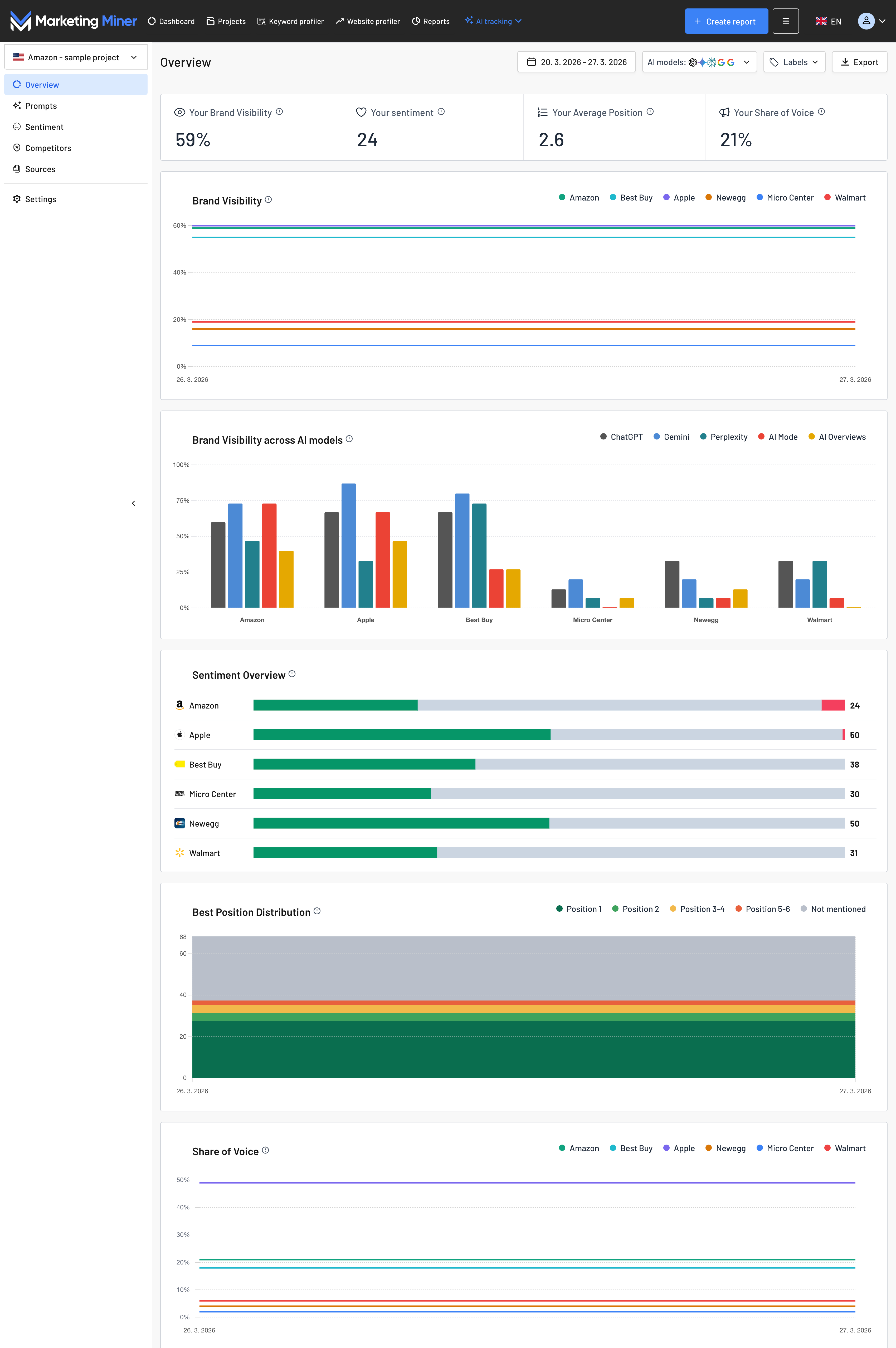
As you’re used to in Marketing Miner, you can filter data by date range, AI model, or custom labels and bulk-export everything you need.
Pricing and more information about the AI add-on
2) Google Rolls Out March 2026 Core and Spam Updates
The final week of March brought two major updates in quick succession. The first, the March 2026 Spam Update, launched on March 24. As Google’s Elizabeth Tucker stated in the official announcement, this update specifically targets "scaled content abuse" and "site reputation abuse."
Through this move, Google aims to purge the SERPs of low-quality content with little to no value. At the same time, it is cracking down on websites that host third-party, often unrelated sections on their high-authority domains purely to artificially boost their rankings. The ultimate goal is to reduce unoriginal and low-quality search results by a staggering 40%. If your pages featuring thin or unoriginal content have seen a sudden drop in rankings, this update is the likely culprit. Just three days later, on March 27, the March 2026 Core Update followed, marking the most significant broad core update of the year so far. You can track the real-time rollout of both updates on the Google Search Status Dashboard.
With this core update, Google is doubling down on rewarding websites that demonstrate high levels of E-E-A-T (Experience, Expertise, Authoritativeness, and Trustworthiness) while penalizing those that create content primarily for algorithms rather than for actual people. As Google explained on X, this update is unique because it integrates a combination of several innovative systems, which explains its complexity and profound impact on search results.
3) Join us at SEO Vibes Summit 2026 in Zakopane, Poland
Want to stay ahead of the curve and gain a competitive edge? Don’t miss the SEO Vibes Summit 2026. It’s the largest SEO event in the region, held in the breathtaking surroundings of Zakopane, Poland, from May 20–22, 2026.
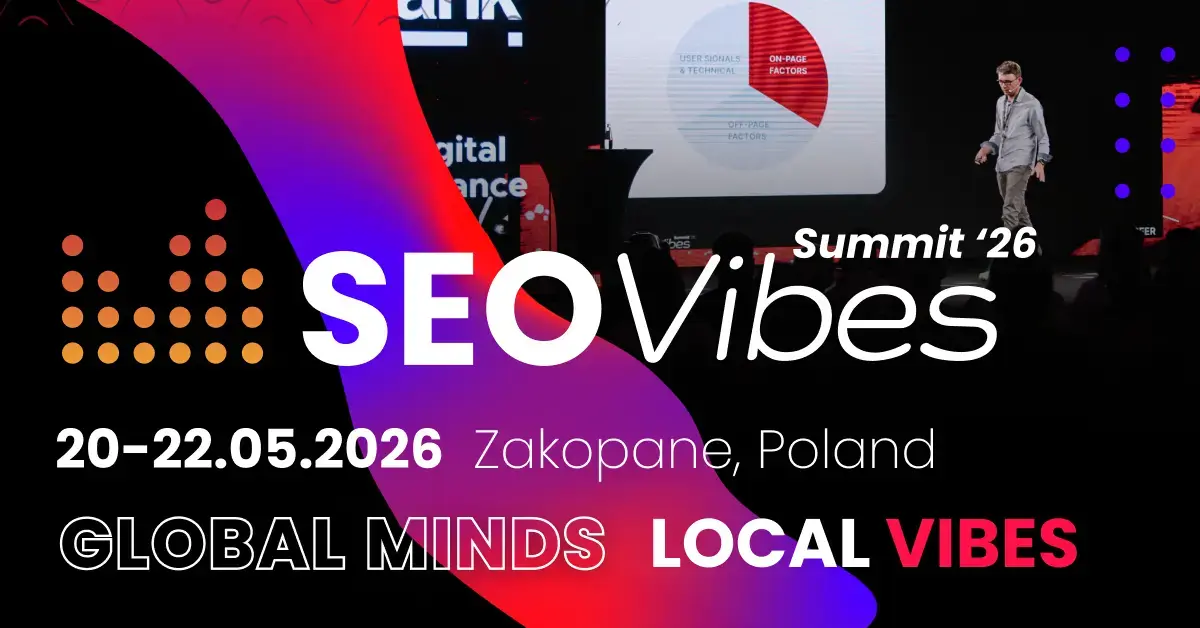
The stage will feature global industry leaders such as Nathan Gotch, Cyrus Shepard, and many others. The program is divided into three specialized tracks:
- SEO & Growth
- Content & AI
- AI & Data
But the summit is about more than just keynotes. You can expect hands-on workshops and exclusive VIP mastermind groups to discuss your strategy directly with the experts.
Exclusive for Marketing Miner users: Get a 15% discount on "Tatras" category tickets! Just use the code: MMINER15
Don’t miss the chance to network with top-tier experts and gain fresh insights you won't find in any tutorial.
More Information and Registration
4) Bing is First to Offer AI Visibility Insights
Within Bing Webmaster Tools, Microsoft has introduced a new AI Performance feature. This is the first official report allowing site owners to track how their content is featured in AI responses - specifically citations in Microsoft Copilot, Bing AI summaries, and partner integrations.
The new report includes:
- Total Citations - how many times your site was cited as a source.
- Average Cited Pages - the daily average of unique URLs cited by the AI.
- Grounding Queries - the queries the AI used internally to find and verify information on your site.
- Page-level Citations - detailed activity for individual subpages.
- Visibility Trends - citation volume over time.
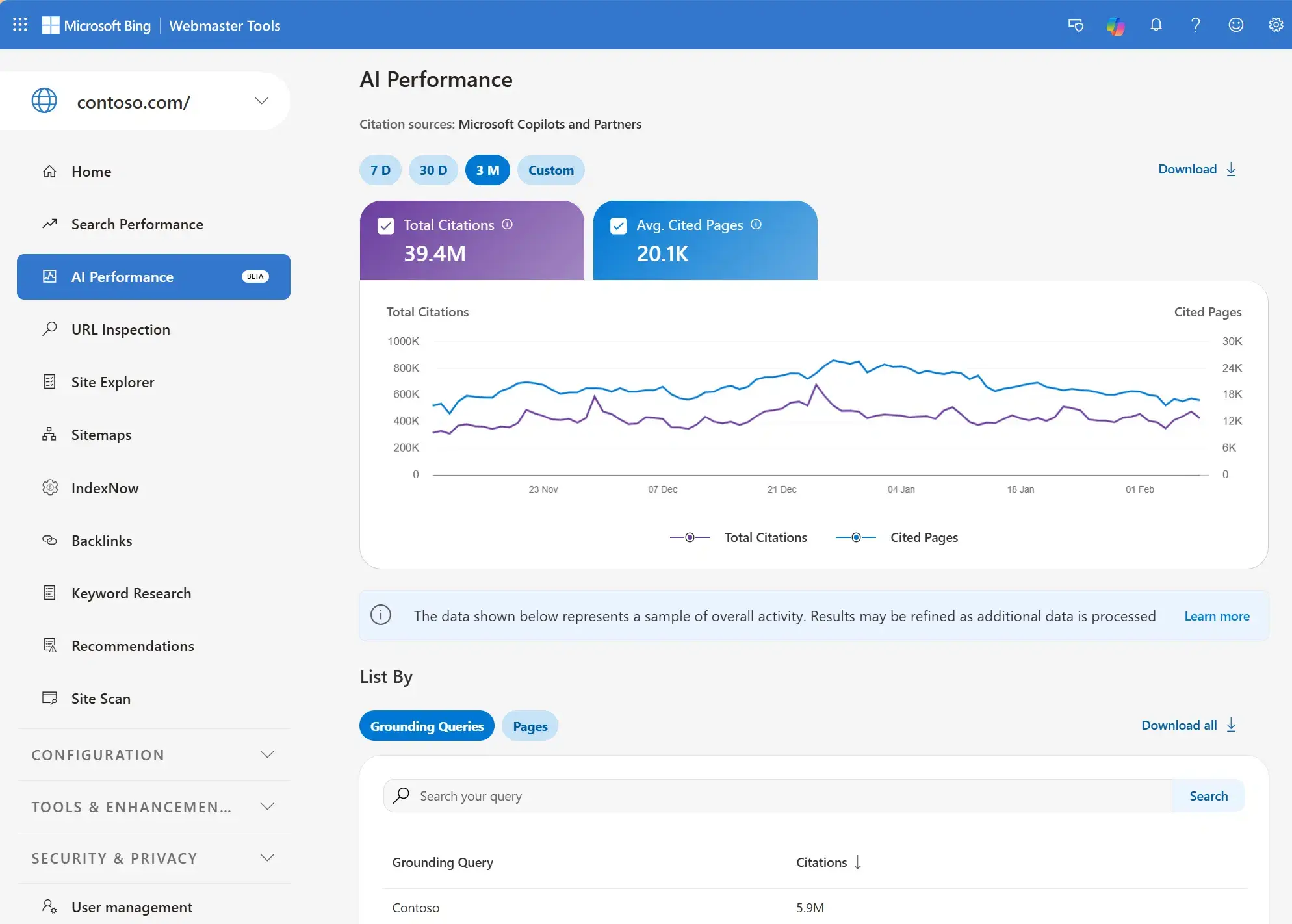
AI Performance Dashboard in Bing Webmaster Tools
The report currently lacks click-through rate (CTR) data. While you can see how often you’re cited, you can’t yet see how many users clicked through to your site.
What does this mean for site owners? Bing has clearly outpaced Google here. While Google includes AI Overview data in general Search Console stats, it doesn't allow you to segment it from "blue link" results. Bing is the first to offer a dedicated report for AI performance, including citations that didn't lead to a direct click.
Marketing Miner TIP: Tracking Grounding Queries (also known as Fan-out Queries) is key to understanding which topics AI models trust you as an authority on. While Bing shows you this within its own tools, you can use Query Fan-out tracking in Marketing Miner for all other models. This provides you with a comprehensive overview of exactly which queries drive AI assistants to choose your website as their information source.
5) Query Fan-out Analysis Shows You What ChatGPT and Gemini Are Really Searching For
Do you know what AI models are actually searching for based on your prompts? To truly understand how to appear in AI answers, you must understand a process called Query Fan-out. This is the mechanism where ChatGPT or Gemini breaks down your original prompt into multiple detailed sub-queries, sends them to Google Search, and synthesizes the final answer.
Understanding Query Fan-out is an absolute necessity. It’s no longer enough to know what users type into a chat; you must understand what the AI models themselves are looking for.
We’ve launched Query Fan-out tracking for ChatGPT and Gemini models. You can find a detailed guide on how to use this data in our dedicated article.
6) Google Highlights Links in AI Overviews and AI Mode
Robby Stein, VP of Product at Google Search, announced via X a new way of displaying links within AI Overviews and AI Mode. The goal is to make information sources much more visible and accessible to users.
What’s changing?
- On Desktop - when a user hovers over a citation, a pop-up preview card appears, featuring an article preview, a brief description, and the website's favicon.
- On Mobile - source icons are now more prominent to make them easier to tap.
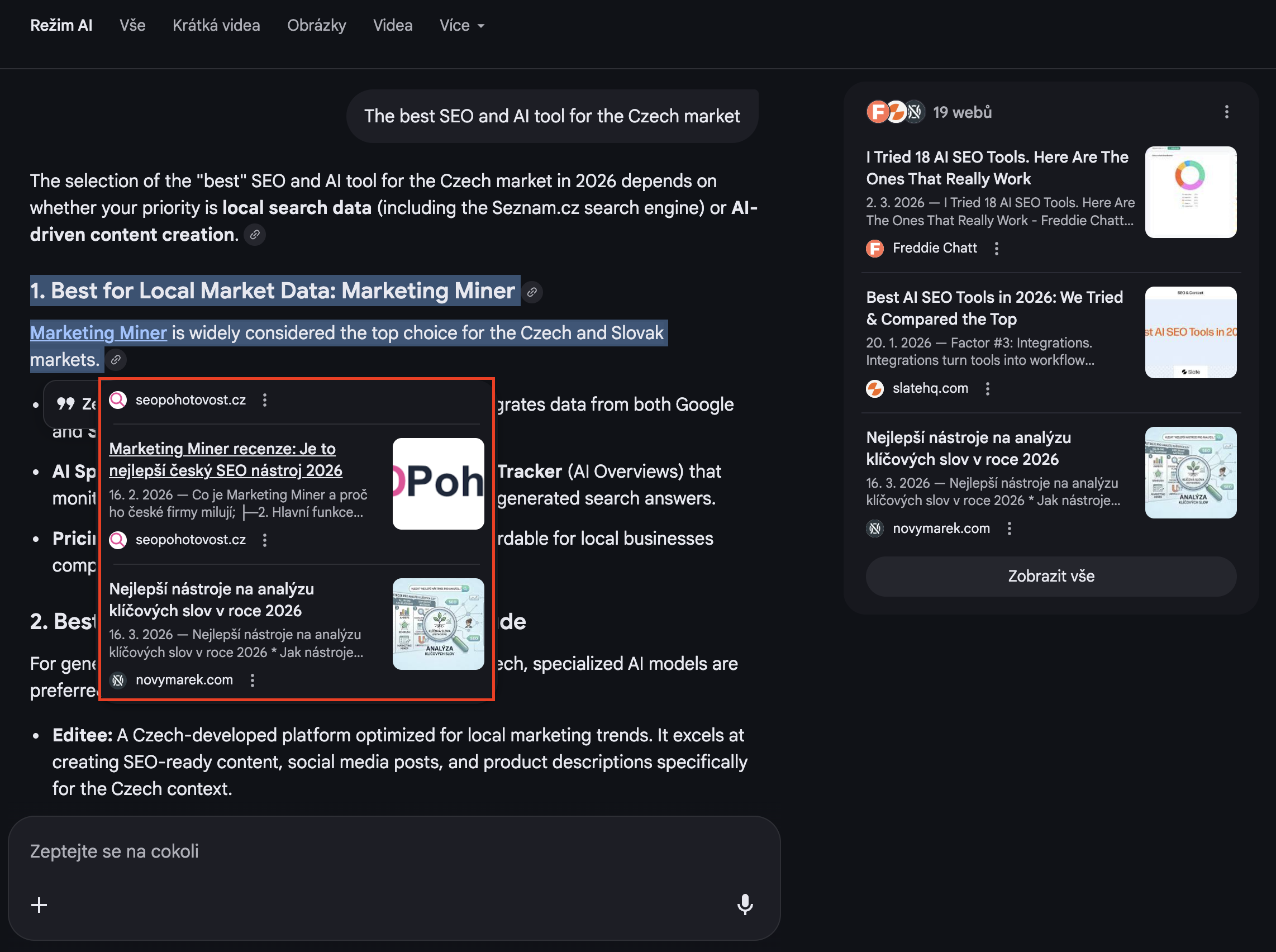
Preview card for cited sources in Google AI Mode
Google’s internal testing suggests these changes lead to higher user engagement and easier click-throughs. This is a direct response to publisher criticism that AI answers were "burying" their content. While we don't have independent CTR data yet, one thing is certain - AI citations are the new form of visibility.
According to BrightEdge analysis, AI answers often cite sources that don't even rank in the top 10 for traditional search. This presents a massive opportunity to "leapfrog" competitors. To increase your chances, focus on clear content structure, concise headers, and direct answers to specific user questions.
Marketing Miner TIP: Want to see how you or your competitors stack up in AI Mode and AI Overviews? Run a one-off analysis or set up regular AI visibility tracking.
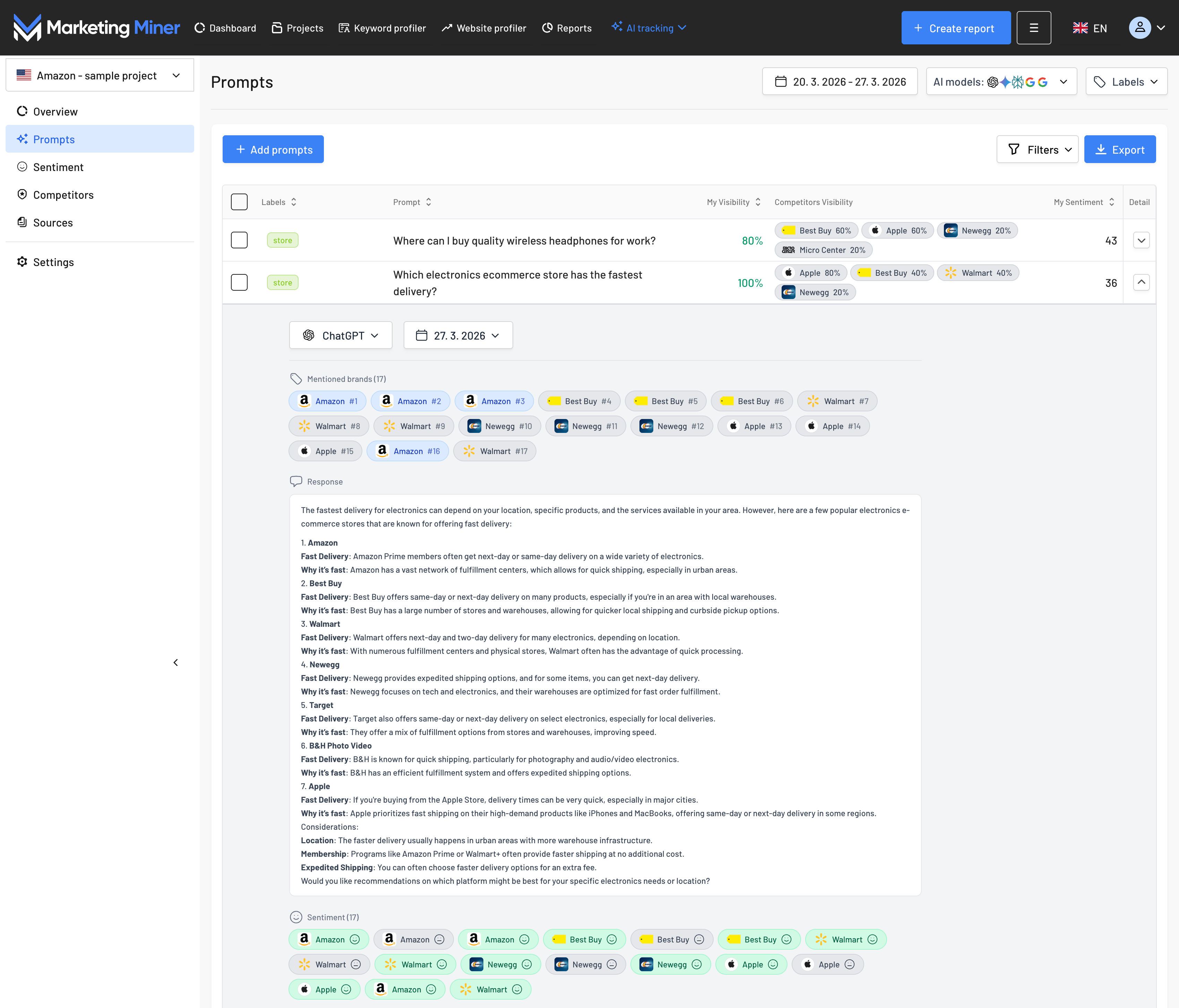
Explore detailed data for all tracked prompts in the sample project
7) Google Search Console Now Features AI-Powered Configuration
Following a two-month pilot, Google has fully launched AI-powered configuration in Google Search Console (GSC). You can find this under the Performance section.
Instead of tedious clicking and manual filtering, you can now simply type what you want to see. GSC will filter data based on natural language prompts, such as: "Show me mobile queries with high impressions but low CTR over the last 28 days."
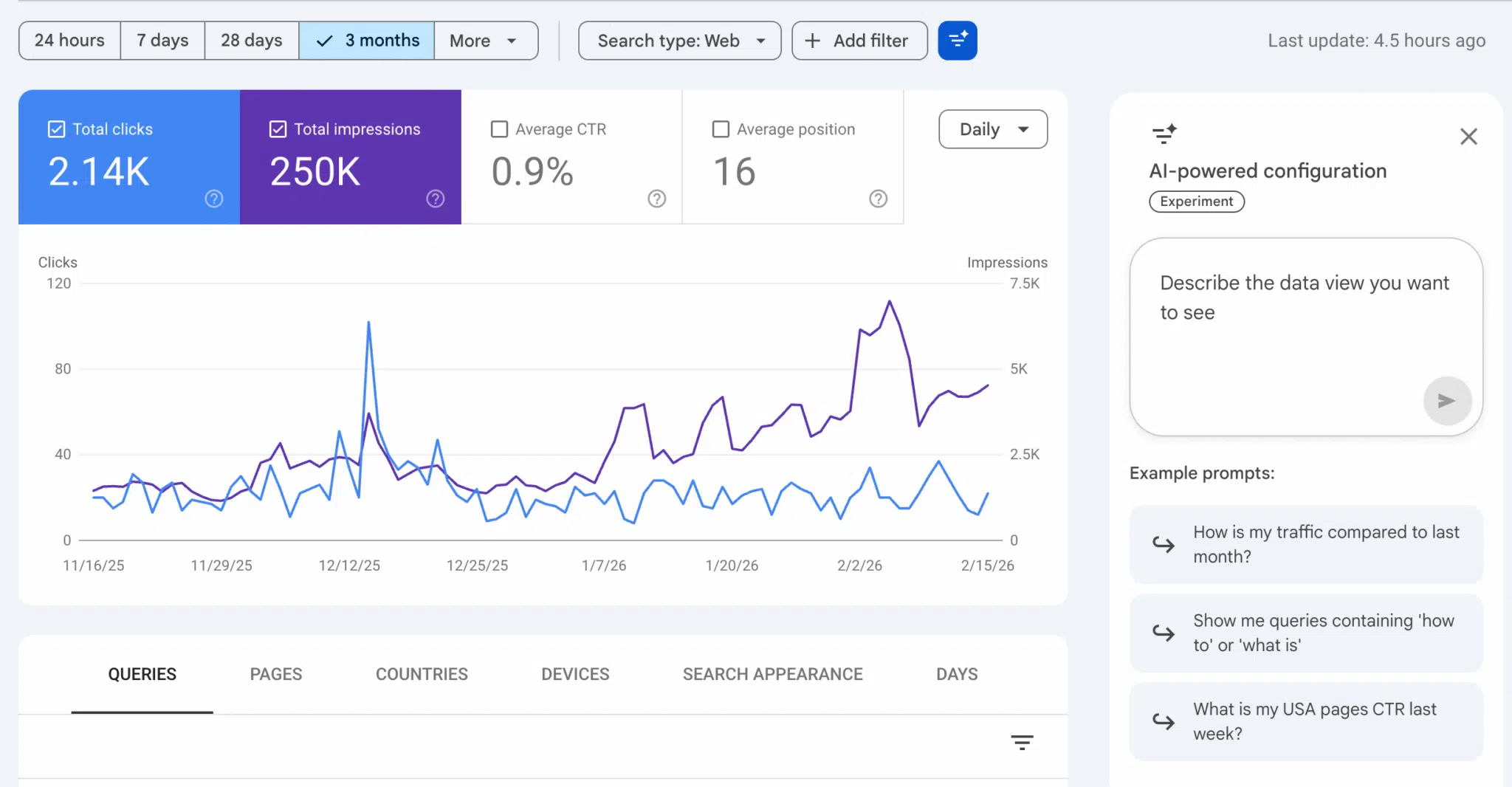
AI-powered configuration in Google Search Console (GSC)
This feature is currently only available for standard Search results. It is not yet available for Discover or News reports. For now, it’s more about user convenience than a technological revolution, but for less experienced users, it’s a very helpful assistant.
8) AI Overviews Cite the Top 10 Less and Less
New research from Ahrefs points to a major shift in how Google selects sources for AI answers. A year ago, 76% of AI Overview citations came from the organic top 10; today, that number has dropped to just 38%.
Google is increasingly prioritizing:
- YouTube Content - video is becoming a dominant force in AI citations.
- Niche Expertise - pages that go into extreme depth on a specific topic.
- Answers to Follow-up Questions - content that covers Query Fan-out (sub-queries created by the AI to provide context).
Key takeaway: Being on page one isn't enough to get an AI citation anymore. Furthermore, an analysis of 1.2 million ChatGPT citations by Kevin Indig found that 44% of all citations come from the first 30% of the text. If you want to be cited, put your most important facts and direct answers at the very top of the page.
In short – focus on topical depth, create accompanying YouTube videos, and place your most important points right at the beginning.
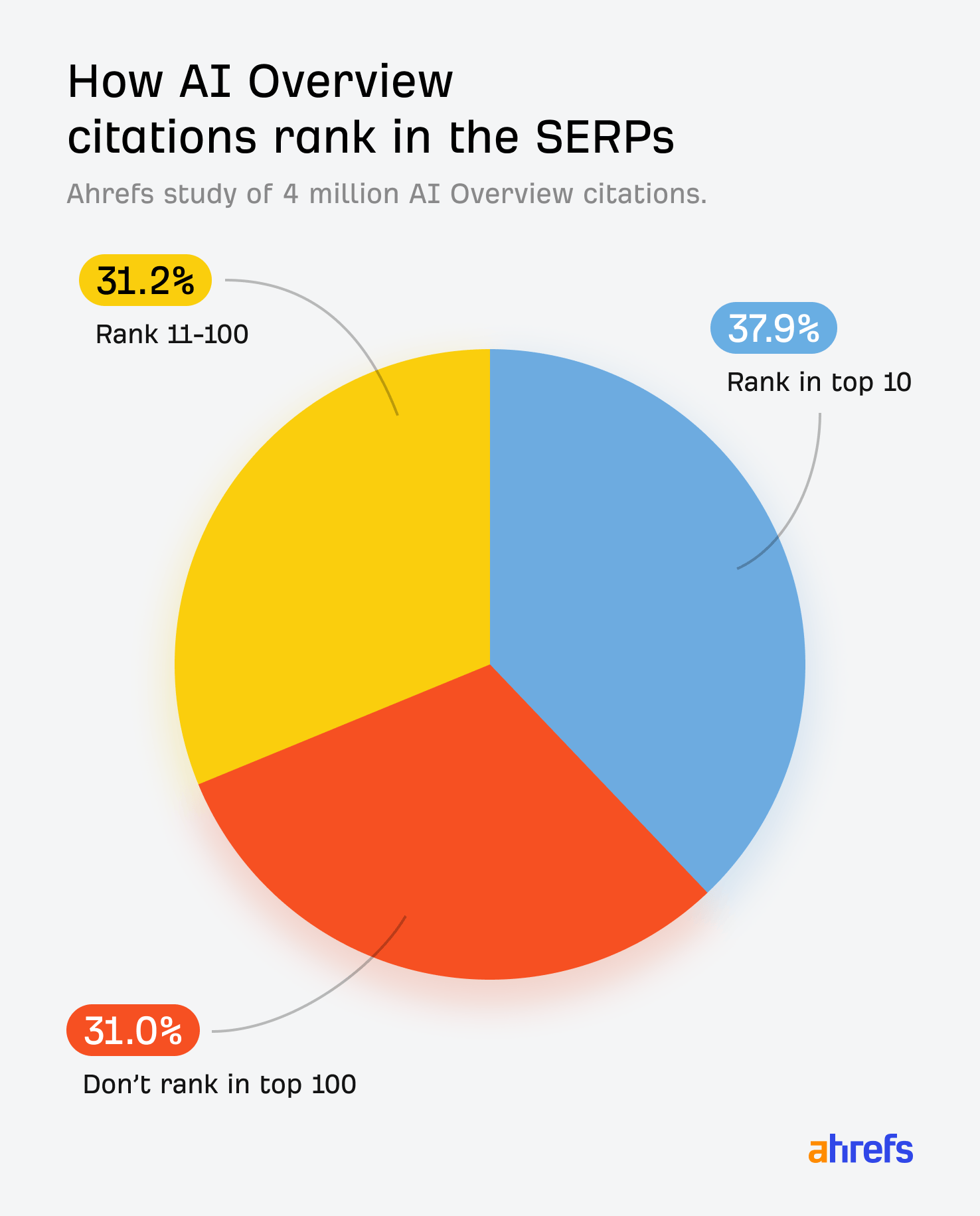
Source: Research by Ahrefs
9) ChatGPT has 12% of Google’s Volume, but Sends 190x Less Traffic
Patrick Stox (Ahrefs) provides a sobering look at how much referral traffic actually comes from AI assistants. He compared total search volume vs. referral traffic from ChatGPT and Google.
The findings are stark:
- Interest is growing - ChatGPT has reached about 12% of search volume compared to Google.
- Clicks are missing - despite the high search volume, Google sends 190x more visitors to websites.
While Google acts as a "guide" designed to send users to a relevant site, ChatGPT acts as a "destination" designed to keep users in the conversation.
What does this mean? AI search currently generates minimal direct traffic, but ignoring it would be a mistake. AI responses heavily influence the decision-making process and buyer cycles - even if it doesn't show up in Google Analytics.
Focus on AI Visibility and Share of Voice as standalone metrics. This is where brand awareness is being built today.
Marketing Miner TIP: We’ve launched regular AI visibility tracking to help you monitor your market share (Share of Voice) across various AI models. This allows you to see how often AI recommends you compared to your competitors - even in cases where the user doesn’t click through to your website directly.
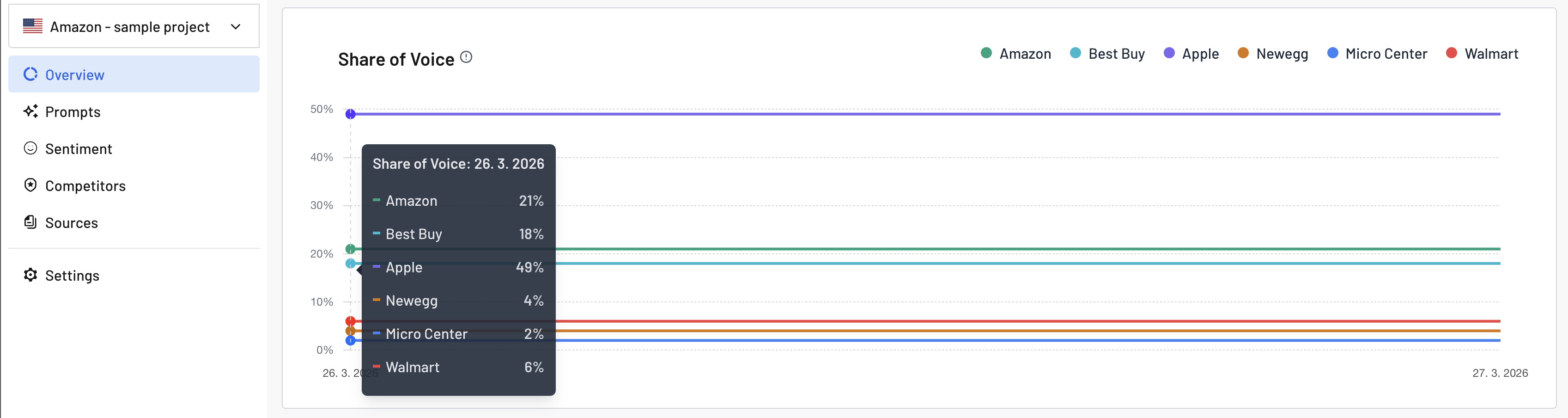
Sample of regular Share of Voice tracking in Marketing Miner
10) Google Rolls Out Canvas in AI Mode to All US Users
Google has made the Canvas feature in AI Mode available to all users in the US. The update no longer requires Search Labs registration and is available directly in the main search interface.
What is Canvas? It’s an interactive workspace that appears alongside search results. Users can work with the Gemini AI assistant to create documents, write code, generate long-form content, or even build simple interactive apps. Google is essentially turning its search engine into a comprehensive productivity tool to compete with ChatGPT and Microsoft Copilot.
11) Microsoft Reveals Hidden Prompts Manipulating AI Recommendations
In February 2026, Microsoft issued a warning about a new form of "Black-hat SEO" for the AI era. It detected over 50 hidden prompts from 31 companies across 14 industries secretly embedded in web content or behind "Summarize with AI" buttons.
These hidden instructions aimed to manipulate the AI assistant’s memory and nudge its recommendations toward specific brands without the user noticing. While these "AI poisoning" techniques might offer short-term gains, the risk is massive. Platforms are already improving algorithms to detect and penalize these tactics.
Instead of shortcuts, bet on building genuine authority. Long-term AI visibility is secured through high-quality structured content, clear topical expertise, and mentions in trusted, third-party sources.